
Freethought-Now

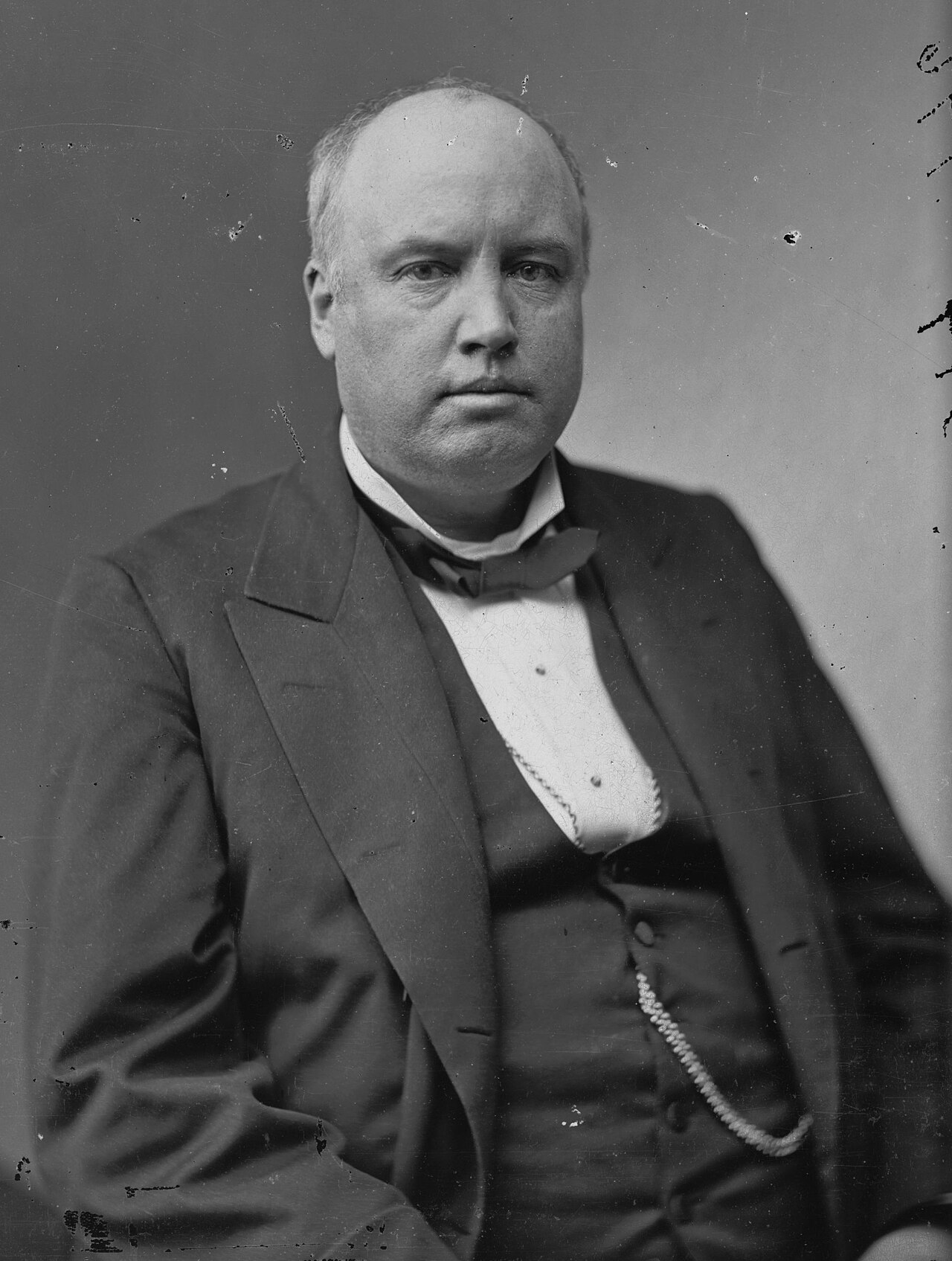
By Robert Ingersoll
(Edited and with a note by Scott Knickelbine, Director of Information Technology, Freedom From Religion Foundation)
Listen to an audio recording of this blog on Freethought TV.
Editor’s note: Robert G. Ingersoll is practically unknown today, but he was the most popular public speaker of the late 19th century. Indeed, Ingersoll spoke to such large audiences that it is estimated he was seen by more people than anyone in history before the invention of television. His talks were admired by Mark Twain, Frederick Douglass and Clarence Darrow, among millions of others.
While Ingersoll spoke on many topics, he was best known as “The Great Agnostic” for his passionate defense of atheism, his witty ridicule of Christian dogma, and his strident insistence on the separation of religion and government.
Ingersoll gave this speech before “a vast assemblage” on July 4, 1876, in Peoria, Ill., on the 100th anniversary of the adoption of the Declaration of Independence. In it, he argues that the true genius of the Founders lay in their deliberate omission of any religious test or deity from the nation’s foundational framework. By ignoring the “divine right” of kings and priests, they built the first purely secular government in human history.
Although his words are dated by their reliance on masculine pronouns that were universal in this time, on the 250th anniversary of American independence, we need to heed Ingersoll’s voice again.
One hundred years ago, our fathers retired the gods from politics.
THE Declaration of Independence is the grandest, the bravest, and the profoundest political document that was ever signed by the representatives of a people. It is the embodiment of physical and moral courage and of political wisdom.
I say of physical courage, because it was a declaration of war against the most powerful nation then on the globe; a declaration of war by thirteen weak, unorganized colonies; a declaration of war by a few people, without military stores, without wealth, without strength, against the most powerful kingdom on the Earth; a declaration of war made when the British navy, at that day the mistress of every sea, was hovering along the coast of America, looking after defenseless towns and villages to ravage and destroy. It was made when thousands of English soldiers were upon our soil, and when the principal cities of America were in the substantial possession of the enemy. And so, I say, all things considered, it was the bravest political document ever signed by man. And if it was physically brave, the moral courage of the document is almost infinitely beyond the physical. They had the courage not only, but they had the almost infinite wisdom, to declare that all men are created equal.
Such things had occasionally been said by some political enthusiast in the olden time, but, for the first time in the history of the world, the representatives of a nation, the representatives of a real, living, breathing, hoping people, declared that all men are created equal. With one blow, with one stroke of the pen, they struck down all the cruel, heartless barriers that aristocracy, that priestcraft, that king-craft had raised between man and man. They struck down with one immortal blow that infamous spirit of caste that makes a God almost a beast, and a beast almost a god. With one word, with one blow, they wiped away and utterly destroyed, all that had been done by centuries of war — centuries of hypocrisy — centuries of injustice.
What more did they do? They then declared that each man has a right to live. And what does that mean? It means that he has the right to make his living. It means that he has the right to breathe the air, to work the land, that he stands the equal of every other human being beneath the shining stars; entitled to the product of his labor — the labor of his hand and of his brain.
What more? That every man has the right to pursue his own happiness in his own way. Grander words than these have never been spoken by man.
And what more did these men say? They laid down the doctrine that governments were instituted among men for the purpose of preserving the rights of the people. The old idea was that people existed solely for the benefit of the state — that is to say, for kings and nobles.
The old idea was that the people were the wards of king and priest — that their bodies belonged to one and their souls to the other.
And what more? That the people are the source of political power. That was not only a revelation, but it was a revolution. It changed the ideas of people with regard to the source of political power. For the first time it made human beings men. What was the old idea? The old idea was that no political power came from, or in any manner belonged to, the people. The old idea was that the political power came from the clouds; that the political power came in some miraculous way from heaven; that it came down to kings, and queens, and robbers. That was the old idea. The nobles lived upon the labor of the people; the people had no rights; the nobles stole what they had and divided with the kings, and the kings pretended to divide what they stole with God Almighty. The source, then, of political power was from above. The people were responsible to the nobles, the nobles to the king, and the people had no political rights whatever, no more than the wild beasts of the forest. The kings were responsible to God; not to the people. The kings were responsible to the clouds; not to the toiling millions they robbed and plundered. …
At last our fathers became tired of being colonists — tired of writing and reading and signing petitions, and presenting them on their bended knees to an idiot king. They began to have an aspiration to form a new nation, to be citizens of a new republic instead of subjects of an old monarchy. They had the idea — the Puritans, the Catholics, the Episcopalians, the Baptists, the Quakers, and a few Freethinkers, all had the idea — that they would like to form a new nation. …
They made up their minds that a new nation must be formed. All nations had been, so to speak, the wards of some church. The religious idea as to the source of power had been at the foundation of all governments, and had been the bane and curse of man.
Happily for us, there was no church strong enough to dictate to the rest. Fortunately for us, the colonists not only, but the colonies differed widely in their religious views. There were the Puritans who hated the Episcopalians, and Episcopalians who hated the Catholics, and the Catholics who hated both, while the Quakers held them all in contempt. There they were, of every sort, and color and kind, and how was it that they came together? They had a common aspiration. They wanted to form a new nation. More than that, most of them cordially hated Great Britain; and they pledged each other to forget these religious prejudices, for a time at least, and agreed that there should be only one religion until they got through, and that was the religion of patriotism. They solemnly agreed that the new nation should not belong to any particular church, but that it should secure the rights of all.
Our fathers founded the first secular government that was ever founded in this world. Recollect that. The first secular government; the first government that said every church has exactly the same rights and no more; every religion has the same rights, and no more. In other words, our fathers were the first men who had the sense, had the genius, to know that no church should be allowed to have a sword; that it should be allowed only to exert its moral influence. …
So our fathers said: “We will form a secular government, and under the flag with which we are going to enrich the air, we will allow every man to worship God as he thinks best.” They said: “Religion is an individual thing between each man and his creator, and he can worship as he pleases and as he desires.” And why did they do this? The history of the world warned them that the liberty of man was not safe in the clutch and grasp of any church. They had read of and seen the thumb-screws, the racks, and the dungeons of the Inquisition. They knew all about the hypocrisy of the olden time. They knew that the church had stood side by side with the throne; that the high priests were hypocrites, and that the kings were robbers. They also knew that if they gave power to any church, it would corrupt the best church in the world. And so they said that power must not reside in a church, or in a sect, but power must be wherever humanity is — in the great body of the people. And the officers and servants of the people must be responsible to them. And so I say again, as I said in the commencement, this is the wisest, the profoundest, the bravest political document that ever was written and signed by man.
They turned, as I tell you, everything squarely about. They derived all their authority from the people. They did away forever with the theological idea of government.
The post The real American Revolution: Robert Ingersoll’s ‘Centennial Oration’ and America 250 appeared first on Freethought Now.