

I remember when the terms “crunchy” and “granola” had primarily liberal connotations.
Marked by a concern for the environment, the quality of the food we were consuming and the educational value of children’s books and free play outside, until recently it was always something I associated with hippies and left-leaning people. My own parents were basically crunchy adjacent when I was a kid in the early aughts. They weren’t eschewing all preservatives or plastic toys or screen time, but we did spend more time at the library and playing outside and watching PBS and listening to NPR than most kids I knew.
Apparently, around this same time “crunchy conservatism” was starting to take hold (see this 2006 piece from NPR on the topic), but in my own rural corner of Indiana, that certainly didn’t seem to be the case. Though I was 9 when that piece came out, and while I was a pretty politically aware 9-year-old, I was still more concerned with spelling tests and figuring out how to hula-hoop (never did get that one) than the conservative opinion on organic tomatoes, so maybe that’s why I missed it.
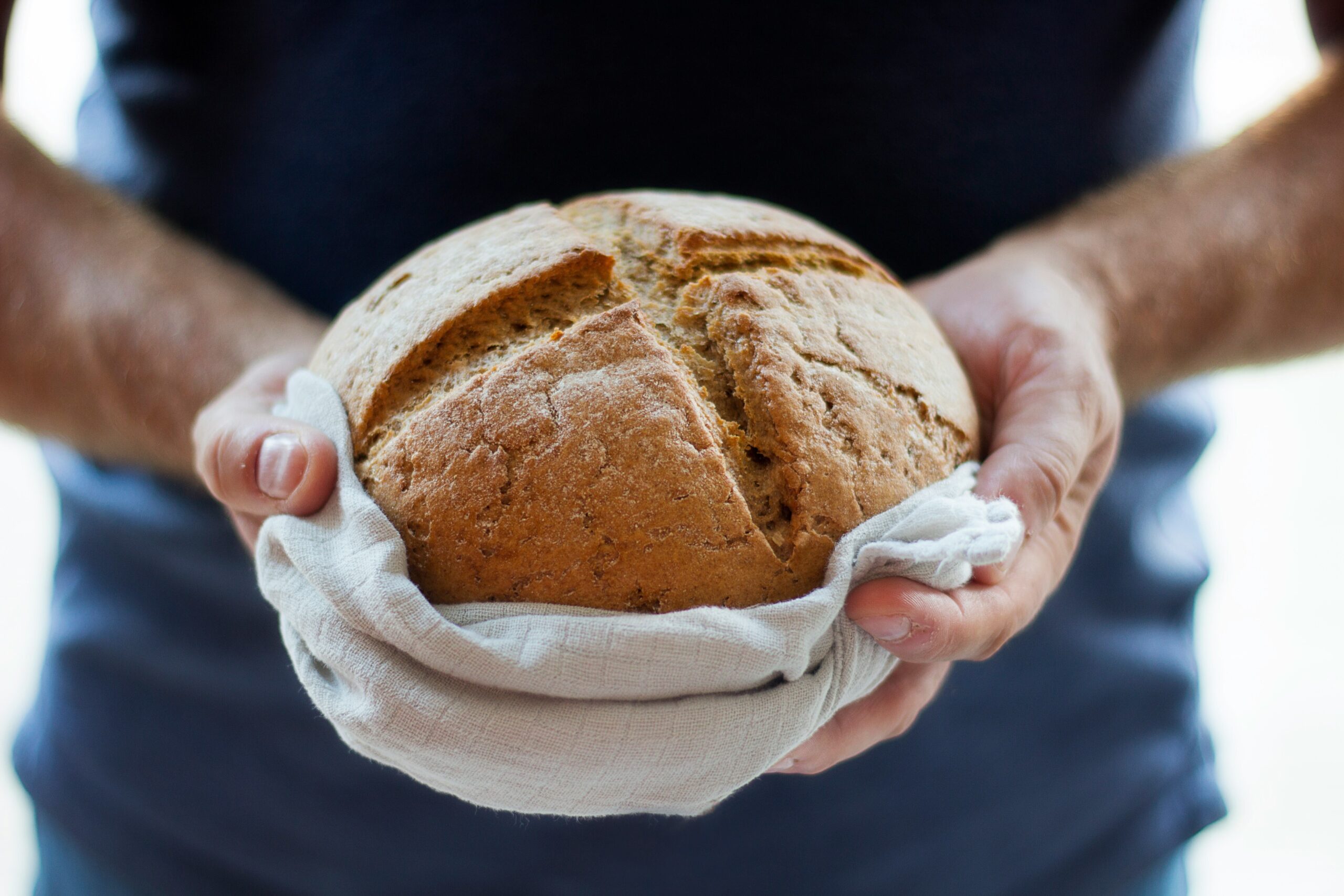
But all of this seems to have taken a radical shift to the right in recent years. I’m sure it happened earlier than when I first noticed. I only really started picking up on it during the spring of 2020. I, like many people going stir-crazy at home trying to isolate from potential Covid exposure, got really into baking sourdough bread and other things from scratch, and I picked up plenty of tips from TikTok.
The “Cottage-core” aesthetic was popping off at the time as influencers made gorgeous videos set to calming music of them kneading dough, baking and removing the lids from their Dutch oven to reveal stunning loaves of bread. A lot of us found a ton of joy in a task that required us to use our hands and take a break from doomscrolling. But I also remember seeing a huge rise in discussions about “gut health” (the fermentation process for sourdough can be good for digestion) and “chemicals” in our foods alongside the new interest in baking.
Gardening saw a similar boost as people looked to fill their time at home and mitigate rising grocery prices, but it also brought a new level of fearmongering about pesticides and GMOs. Herb gardening, in particular, became popular amongst young people like me living in apartments, and with it came an interest in herbal medicine, especially as we were all trying to find any possible cure for the pandemic and watching our mainstream public health systems fracture. People seemed increasingly distrustful of their food and medicine, at a rate I, at least, was previously unaware of.
With this distrust came the rise of the “tradwife” influencer. Hannah Neeleman and Nara Smith, amongst others, with their gaggles of adorable children, impeccable prairie dresses and home-cooked meals, presented themselves as aspirational. Primarily supported by a Christian theology, these women present a narrative that the world’s problems could be solved by returning to a simpler time, well before Covid was even a thought in anyone’s minds, where people ate food that they grew themselves, their children ran around barefoot, and, of course, where traditional gender roles were honored. Christianity was at the center of everything. But it wasn’t only the conservative Christians tapping into these ideas.
Much of my “for you” page at the time, along with Animal Crossing and baking videos, was (and still is) filled with a revival in neopaganism, Wicca and other “alternative” spiritualities. Many people who leave Christianity still feel a sense of spirituality, and a not-insignificant number are drawn to these more individualized forms, where they can engage on their own terms. Some of it comes from an interest in unpacking culture from Christian colonialism as well, digging into what beliefs their ancestors held pre-Christianization.
The biggest, most well-known faces in the space inhabited some of the same demographics as the tradwife set, namely cisgender white women with flowing skirts and herb gardens and fresh-baked bread, though typically fewer children in sight, and more gay/bi folks to be sure.
For me, any creator that heavily focuses on the “divine feminine” and “embracing your feminine energy” immediately launches a red flag about a thousand feet into the air. That’s not to say that there is anything inherently wrong with a belief system that acknowledges and values femininity, but often in these online spaces it signals a whole hodgepodge of biological essentialist, TERF, anti-reproductive choice politics. Many of these alternative spirituality creators preach to their primarily female audience that their problems can be solved if they just embrace their “natural feminine powers,” which typically include “nurturing” and “caretaking” and “creating life.” Often you will see them suggesting that their female followers learn to take on more submissive roles and avoid “masculine” behaviors for the sake of their spiritual health.
So prevalent is the biological essentialism and two-dimensional view on womanhood and femininity that if you removed the specific gods and religious texts from the equation, it would be nigh on impossible to tell the difference between many “divine feminine” witchtokers and the “tradwife” influencers. They’re both deeply hostile to gender diversity, or even simply diverse expressions of womanhood amongst cis women. They eschew many aspects of modern life, including birth control, vaccines and other medical revolutions, and stoke fear of progress in their followers.
Let’s step back for a moment and discuss the alt-right pipeline more generally. As defined by the Southern Poverty Law Center, the alt-right “is a set of far-right ideologies, groups and individuals whose core belief is that ‘white identity’ is under attack by multicultural forces using ‘political correctness’ and ‘social justice’ to undermine white people and ‘their’ civilization.” You’ve almost certainly come across alt-right accounts on social media. They may take on the face of Radical Traditionalist Catholics, conservative political commentators like Ben Shapiro and Alex Jones, pastors across a wide variety of denominations, and any number of conservative podcast bros, amongst others. They go beyond standard conservative belief in limited government and individual liberty, and almost exclusively follow the MAGA political framework. They firmly believe that the United States needs to be saved from “liberal identity/gender/racial politics” and that a return to “traditional” gender and racial hierarchies, along with a hypernatalist politick, is necessary for saving Western civilization.
They also won’t always necessarily characterize themselves as “alt-right” and in particular, the individuals that want to present themselves as “rational intellectuals” rather than extremists will claim that they are simply “classical libertarians” and “philosophers.” Frequently you’ll find that they seem to believe that the peak of human knowledge was, at best, during the Enlightenment, and that any philosophical evolution past that moment is absurdist nonsense that should be disregarded. Their philosophical heroes are, unsurprisingly, white men, with a particular focus on the Classical Philosophers, such as Socrates, Plato and Aristotle. Women philosophers, with perhaps the exception of Ayn Rand, rarely make an appearance in their citations, unless to serve as objects of ridicule or symbols of the “decline” of intellectualism. Concepts like classical masculine “virtue” and the rejection of postmodernism are found across the intellectual thought machine of the alt-right.
The alt-right pipeline, then, is the process by which individuals, who may have espoused more moderate, or even liberal views, are brought into the alt-right political fold. For most Americans, especially younger ones, this has been driven heavily by social media algorithms. A 2020 study featured by the MIT Technology Review found that the YouTube algorithm, for example, was pushing people increasingly towards alt-right content creators, essentially creating an environment in which the viewer becomes a frog boiling in fascist rhetoric.
The feminine “crunchy” alt-right equivalent seems to be operating on a similar algorithmic framework. You look up a few recipes and before you know it, you’re inundated with content encouraging you to get married, have as many babies as possible and become financially dependent on a man. Particularly amongst the Christian flavor of this content, though certainly not limited to it, there is a railing against feminism, and particularly the fight of our mothers and grandmothers for the right to equally participate in the workforce. In clear reaction to the “girl boss” feminism of recent decades, the predominant narrative in these spaces is that women would be far happier leaving the office and returning to the home.
This lifestyle is incredibly appealing to many young women and girls because its justification is based in social and economic realities not fully shared by the masculine alt-right equivalent that makes this pipeline even more dangerous.
Women are held to impossible standards when it comes to balancing career and family life. Stay-at-home moms are ridiculed as unintelligent or inherently anti-feminist. Working mothers receive snide comments from others about how they “could never give up precious time with their children or let a day care raise them,” and often still face the same domestic workload as their stay-at-home counterparts when they return home. And the child-free set is constantly harangued about when they are going to have children, and told that they are selfish and cannot possibly be fulfilled without becoming a mother.
Many women are also realising that the promise of “girlbossing” their way to the top is unrealistic and exhausting and typically requires working unreasonable hours for less pay, often making very little progress unless they already came from a place of social and financial privilege. This disenchantment with capitalist feminism causes many women to embrace the romanticized version of the housewife of bygone eras, in which office politics and financial stressors are left to the husband. Rather than blame the social structures that have long forced families to struggle to meet basic needs like food, housing and health care, the feminine alt-right blames feminism and sexual liberation for their struggles.
The feminine alt-right movement also tends to have more compelling defenses against many of its detractors, and has been able to shrewdly weaponize both classic anti-feminist rhetoric and “choice feminist” rhetoric as the moment calls for. “Choice feminism” frames any choice a woman makes as inherently feminist because the woman is making the choice, with little regard for the systemic impacts that either cause or are proliferated by said choice. It’s a highly individualistic conceptualization of feminism that works to insulate its wielders from critique, because any criticism can be met with a simple rebuttal about respecting women’s choices.
The draw for conservative Christian women is easy to trace, and it’s easy to figure out how they made their way into the pipeline, because as will be clear in a moment, this particular brand of Christian thought is its origin.
Gender theology in conservative Christian circles has historically been explicitly clear on sex and gender roles, with much of the framework for these roles traceable to the story of Adam and Eve in Genesis. Adam, having been made first, and having been “tricked” into eating the fruit from “The Tree of Knowledge of Good and Evil” in the Garden of Eden by Eve, is incontrovertible proof of God’s design that men should be in control of both society and their individual families. Eve, on the other hand, came from Adam’s rib, and was designed specifically to be a companion for him, not an equal, and because she was so easily fooled by the serpent in the Garden, she is primarily responsible for the fall of man. Eve’s apparent weakness and primary role in the fall, according to this strain of gender theology, is proof that women need men to be the primary authority in their lives, to guide them away from the sin and temptation that Eve was so susceptible to.
Particularly amongst Christians who take the bible to be wholly literal, this story is weaponized against women in order to subjugate them over and over and over again throughout history. Empire, which frequently goes hand in hand with fascism, relies on gendered and racial hierarchies to survive, which is why you will also almost always find white supremacist theology and Christian nationalism in the same churches that espouse traditional gender theology. The “crunchy” tradwife movement is built by and for these structures.
What is less immediately clear is what the draw for women in alternative spiritual spaces is. After all, folk traditions are often a means of resistance against imperialist cultural hegemony. But there is a strong conservative streak — Norse paganism in particular is rife with white supremacy, with many of its symbols having been co-opted by far right groups, including the Nazis.
There is a broader secular reason for this to mention before tracing things back to Christianity. Much of the neopagan movement in particular harks back to the past, and in particular a romanticized version of the pre-Christian world. While it is certainly important to understand the past and honor tradition as long as it still serves us, this mindset is critical to sliding into conservative politics. Political conservatism, by its very nature, seeks to either maintain the status quo, or, as is becoming increasingly common, return to a mythical past when things were “better.”
But I don’t think we can fully divorce this phenomenon from Christianity, especially considering the sheer cultural impact that Christianity continues to have on every aspect of American life. But this definitely occurs in alternative spirituality spaces as well. Gender issues seem to be the biggest area for this to occur, likely because so much of our sense of a gender binary in the United States is deeply, deeply tied into the Christian colonial project. While pre-Christian society was far from a gender utopia, there were different understandings of both gender and sexuality at the time, and much of the biological essentialism of the neo-pagan movement seems to map much better onto the modern Christian understanding than the histories they claim to be drawing from. Beliefs that women draw power from their ability to nurture life and take care of others. At the same time, men are inherently aggressive and dominant, which are at best light reframings of Christian gender essentialism that view men as the superior head of the household and limit women to the domestic sphere. In both frameworks, women can only become spiritually fulfilled through a domestic life path.
Both of these movements also lean heavily into transphobia. I won’t spend time on Christian transphobia for the moment, as most are aware of the basic argument that trans identity “defies God’s design for men and women.” But the gender essentialism in alternative spirituality also relies on the idea that our abilities, gifts and strengths are inherently tied to our biological makeup. Many “women’s” groups in alternative spiritual spaces actively exclude trans women, focusing on the power they believe inherently flows from biologically female processes like menstruation and childbearing. In these spaces, your gender is determined solely by your biological makeup, and any deviation from that predetermined role will leave one spiritually unfulfilled (even though historically many pre-Christian religions recognized and even honored gender diversity), ringing incredibly similar tones to their Christian counterparts.
As we continue the fight for democracy, gender liberation, queer rights, religious freedom and beyond, we need to continue to be aware of all forms of alt-right and imperialist pipelines. Our well-justified dissatisfaction with the economy and our growing distrust of our public health institutions can and will leave us vulnerable to these pipelines, especially as our social media algorithms direct us toward people who profit from making these lifestyles so appealing. No one is immune to these politics, and we need to continue to push back against gender essentialism in all forms, lest we set social progress back not just decades or centuries, but millennia.
Disclaimer: The views in this column are of the author and do not necessarily reflect those of the Freedom From Religion Foundation.
Leave a Reply