
Freethought-Now

Christian nationalists insist that the separation of church and state is a “lie,” a “misunderstanding” or even an attack on religion itself. They’ve pushed Ten Commandments displays in public schools, have fought for school-sponsored prayer and have worked tirelessly to erode the Johnson Amendment so that churches can engage in partisan politics.
But suddenly, in a remarkable twist, many of these same voices are discovering a deep and abiding concern for the First Amendment.
What has changed? Not the Constitution or the law, just who is exercising religious freedom. As tensions escalate between the Trump administration and Pope Leo XIV, and as public schools accommodate Muslim students, Christian nationalists are now starting to sound a whole lot less skeptical about the separation of religion and government.
The irony would be amusing if it weren’t so revealing.
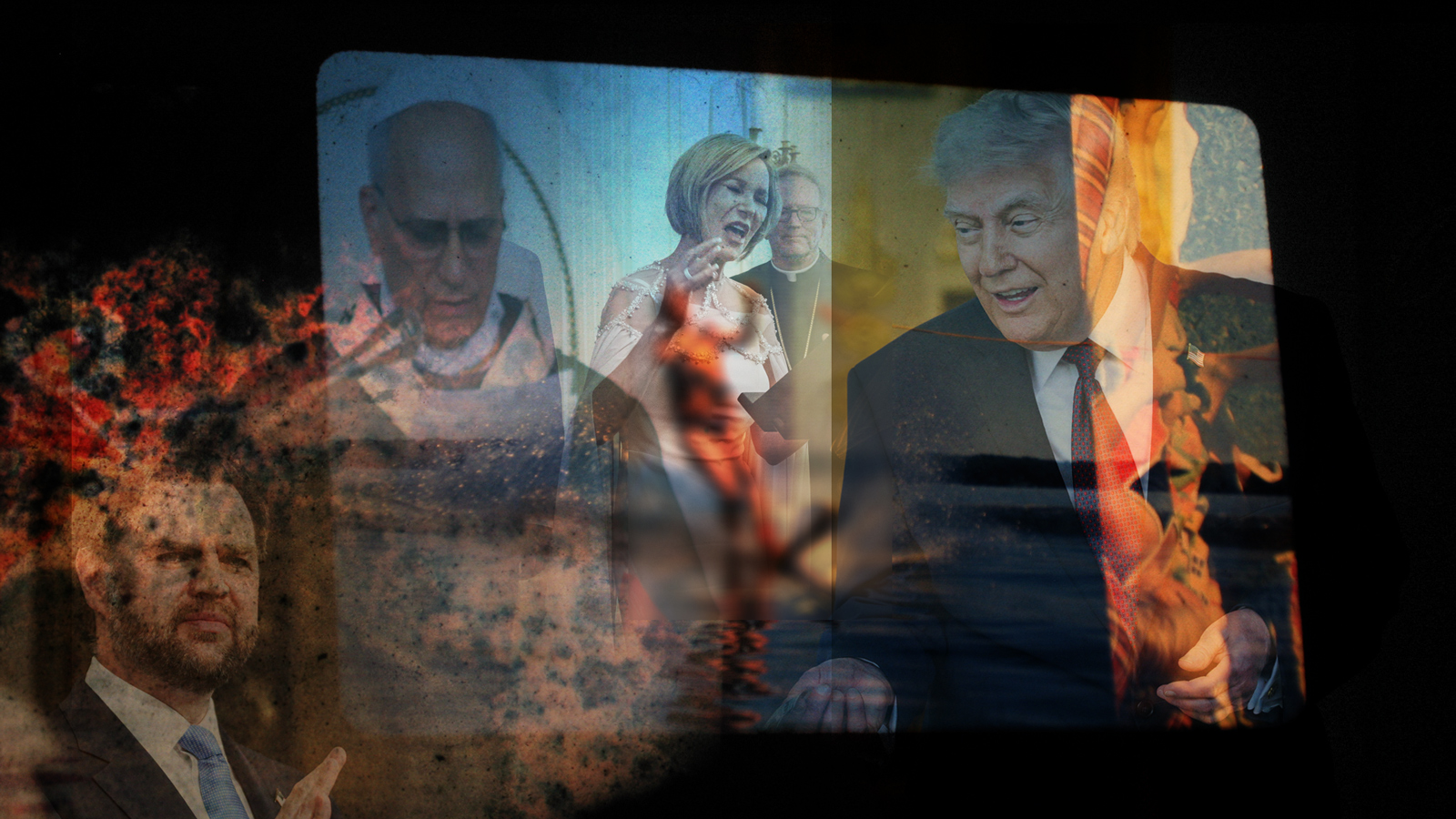
The ongoing clash between the Trump administration and the pope is unprecedented in the governmental hostility exhibited toward the Catholic leadership. Senior officials have openly criticized the pope, with Vice President JD Vance, a recent Catholic convert, warning him to “be careful” about speaking on theology and border czar Tom Homan telling him to “leave politics alone.”
This is a striking position from an administration that routinely cloaks its policies in overtly religious language with the express intent to fuse religion and politics. From invoking divine support for military action to staging prayer events in government settings, the Trump administration has leaned heavily into religious messaging — so long as it aligns with its own agenda. Now, when the head of the Catholic Church criticizes war or immigration policy, suddenly the message is clear: Stay out of politics. We’ll presumably wait a very long time to see similar outrage expressed over Franklin Graham’s defense of President Trump’s recent posting of an AI graphic depicting him as Jesus.
The selective indignation regarding religion becomes even clearer at the state level.
Tennessee Attorney General Jonathan Skrmetti recently blasted a Nashville public school for accommodating Muslim students during Ramadan, calling the effort “blatantly unconstitutional.” According to reports, the school provided a space for prayer and allowed students to step out of class to observe their religious obligations. Skrmetti argued that the school crossed the line from allowing religious exercise to promoting religion, warning that dedicating resources to religious practice could amount to “propagandiz[ing] and proselytiz[ing]” other students.
This is a legitimate concern and the type of thing we oppose at FFRF every day, but it’s curious coming from an attorney general who has claimed that God intentionally placed him at the center of a landmark transgender health care U.S. Supreme Court case. Christian nationalists like Skrmetti have repeatedly tried to mandate bible reading in public schools and inject Christianity into the classroom.
Apparently, the Establishment Clause is only a problem when it’s something other than Christianity that is being accommodated or promoted.
Even longtime FFRF foe and Christian nationalist Todd Starnes recently took to social media to question government funding of religious charities, arguing that if Catholics want to provide charity, it should come from parishioners, not taxpayers. That surprising comment came after the Trump administration, as part of Trump’s feud with the pope, abruptly canceled a $11 million contract with Catholic Charities to shelter and care for unaccompanied migrant children who enter the United States.
The problem is not that Christian nationalists have suddenly discovered the separation of church and state. It’s that they continue to reject it when it applies to themselves.
When Christianity is being promoted, funded or privileged by the government, the Constitution is treated as flexible, even irrelevant. But when other religious groups seek equal treatment, or when religious leaders criticize those in power, the language of “separation of church and state” suddenly becomes very important.
This is not a contradiction. It’s an intentional strategy.
The First Amendment remains what it has always been: a dual guarantee of religious freedom and government neutrality. As FFRF has constantly pointed out, there is no true religious freedom if religion is in government. Public schools may not promote religion, but they must reasonably accommodate the rights of religious students. Religious leaders as individuals are free to speak on political issues, but the tax-exempt organizations they run may not use tax-exempt donations to endorse candidates. And the government may not favor one religion over another — or religion over nonreligion.
These principles apply equally to everyone.
If there’s any silver lining, it’s this: In moments like these, even some of the most vocal opponents of state/church separation inadvertently make FFRF’s case for us. They recognize, however briefly and selectively, that government entanglement with religion can be dangerous. That taxpayer funding of religion raises serious concerns. That religious influence in public institutions can cross constitutional lines.
They’re right. Now they just need to apply that principle consistently. Because the First Amendment protects all of us, or it protects none of us.
Disclaimer: The views in this column are of the author and do not necessarily reflect those of the Freedom From Religion Foundation.
The post Suddenly, the separation of church and state matters — sort of appeared first on Freethought Now.
Leave a Reply
You must be logged in to post a comment.